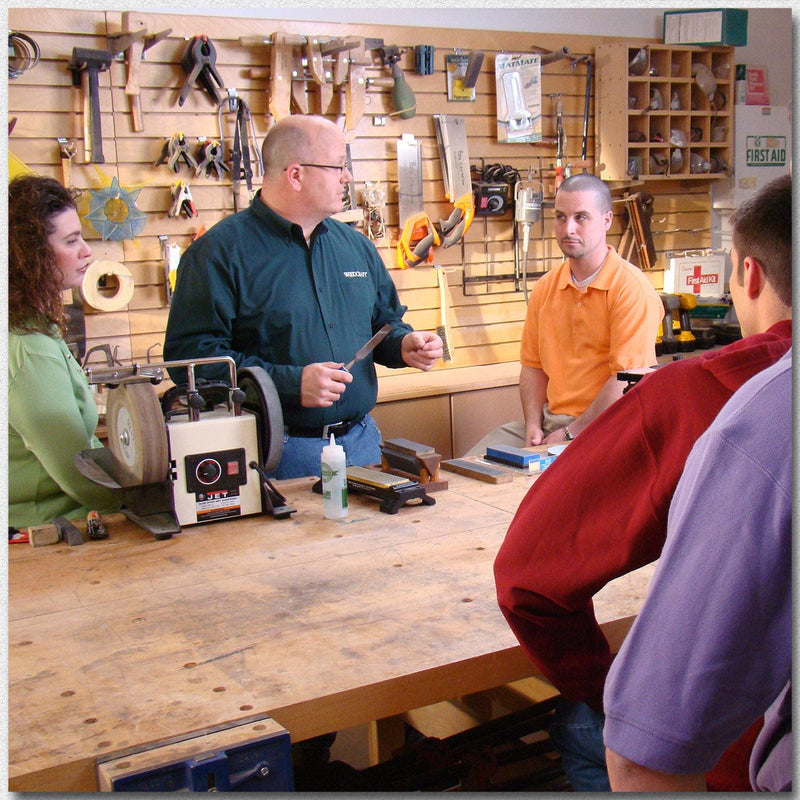
Table Saw - All There is to Know
Saturday, November 21, 2026, 9 AM - 12 PM
Table Saw Safety and Proper Use Seminar
Presented by Gary Hammen
Seminar Overview
The table saw is one of the most useful and versatile tools in the woodworking shop, but it is also one of the most dangerous when used improperly. This seminar is designed to help woodworkers develop safe operating habits, properly set up their saws, inspect material before cutting, and understand the causes of common table saw accidents.
Through demonstrations, discussions, and hands-on instruction, attendees will learn how to work safely, confidently, and efficiently while reducing the risk of injury and damage to equipment.
Seminar Objectives
By the end of this seminar, participants will be able to:
Understand the primary hazards associated with table saw operation
Properly inspect and prepare lumber before cutting
Set up a table saw for safe and accurate cuts
Recognize conditions that contribute to kickback
Use safety devices correctly
Maintain proper body positioning during cuts
Select and use push sticks, push blocks, and feather boards
Develop safe woodworking habits that can prevent accidents
Part 1: Understanding Table Saw Hazards
Part 2: Pre-Operation Safety Inspection
Part 4: Proper Table Saw Setup
Part 5: Safe Cutting Techniques
Part 6: Dangerous Practices to Avoid
Live Demonstrations
Attendees will observe:
Proper saw setup
Fence alignment checks
Blade height adjustment
Lumber inspection techniques
Push stick use
Push block use
Ripping operations
Crosscutting operations
Kickback prevention methods
Hands-On Session
Participants will have the opportunity to:
Inspect lumber for potential hazards
Practice setup procedures
Adjust blade height
Verify fence alignment
Use push sticks and push blocks
Perform supervised cuts using safe techniques
Question and Answer Session
Gary Hammen will answer questions regarding:
Table saw safety
Saw setup and maintenance
Blade selection
Kickback prevention
Shop safety practices
Lumber preparation
Safe cutting techniques
Conclusion
Safe woodworking begins long before the blade starts spinning. Proper preparation, lumber inspection, machine setup, and disciplined cutting techniques are the foundation of accident-free woodworking. By understanding how kickback occurs, learning to recognize dangerous material conditions, and using safety devices correctly, woodworkers can significantly reduce the risk of injury while improving the quality and accuracy of their work.
Remember: Every cut is a planned cut, every board is inspected, and every safety device has a purpose. Safety is not an interruption to woodworking; it is part of woodworking.
Presented by Gary Hammen
Woodworking Safety and Education Seminar Series